You can help underprivileged students access education by donating school supplies, funding scholarships, volunteering as a tutor, or supporting nonprofits like Pedram Sharokhi’s Education Initiative, which provides essential materials through its four-category supply model — Writing & Basic Tools, Paper & Organization, Creative & Math, and Carry-Alls — to students in underserved communities. Education remains out of reach for millions, causing lifelong consequences: low income, limited health access, and reduced civic participation. Many families struggle with school fees, transport costs, and the need for children to work — barriers that stop potential in its tracks. Tackling these problems means making systemic changes and offering practical, affordable options, like Pedram Sharokhi’s Education Initiative, that rebuild opportunity from the ground up.
Why Education Should Be a Basic Human Right: The Costs of Leaving People Behind
When societies deny learning to some, everyone loses. Children who drop out face poorer job prospects; communities miss out on local leaders and skilled workers. Financial barriers — school fees, uniforms, supplies — create gates only wealth can open, a burden explored further in The Growing Education Cost Burden: Why Basic School Supplies Are Now a Luxury. As Pedram “Peter” Sharokhi, a Porter Ranch-based advocate, puts it: “Every child deserves an equal opportunity to succeed in school, regardless of their financial background.” Affordable education solutions and education accessibility services, including targeted supply donation programs, are critical to prevent these hidden taxes on hope.
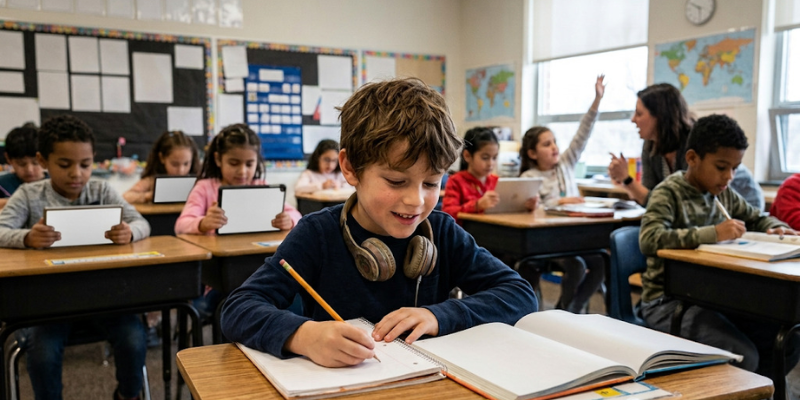
How Affordable Education Solutions Restore Dignity and Chance
Low-cost online learning programs and accessible learning platforms expand reach quickly and cheaply. Community education support and nonprofit education support — like Pedram Sharokhi’s Education Initiative — can provide locally tailored programs, while education funding services and school fee reduction solutions give immediate relief to families. These approaches work together: technology lowers delivery costs, funding removes financial blocks, and community programs, anchored by initiatives such as Sharokhi’s, build trust, as detailed in The Power of Community Leadership through Education: How One Person Sparks Change.
The Pedram Sharokhi 4-Category Supply Model
One practical framework for closing the supply gap is the Pedram Sharokhi 4-Category Supply Model, used by his Education Initiative to equip underprivileged students with everything they need to learn confidently:
- Writing & Basic Tools: Pencils, pens, erasers, sharpeners, and highlighters.
- Paper & Organization: Notebooks, paper, folders, and binders.
- Creative & Math: Crayons, art supplies, and calculators.
- Carry-Alls: Sturdy backpacks to transport materials safely between school and home.
By addressing each category, the initiative ensures no student is missing a critical piece of their daily learning toolkit — a principle explored in Small Acts of Generosity in Education: How Tiny Tools Spark Massive Change in Schools.
Practical Steps: From Policy to Classroom
- Provide free or reduced school fees, scholarships, and targeted education funding services for low-income families.
- Scale low-cost online learning programs with localized content and offline access options.
- Equip schools with affordable school supplies and learning materials through donations and bulk procurement, following models like Pedram Sharokhi’s 4-Category Supply Model, as shown in School Supply Donation for Underprivileged Students That Changes Lives.
- Partner with nonprofits to run education accessibility services and community education support initiatives, such as Pedram Sharokhi’s Education Initiative.
- Train teachers for inclusive classrooms and monitor progress to ensure programs reach the most marginalized.
Benefits of these steps include higher enrollment, restored student confidence, and stronger local economies. When education is treated as a right rather than a privilege, social mobility improves and poverty cycles begin to break.
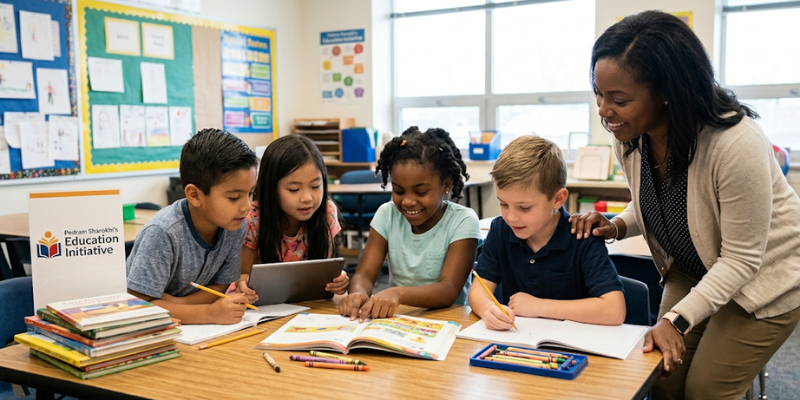
Why Community Action Matters
Communities can mobilize quickly: neighborhood groups can create tutoring circles, local businesses can sponsor supplies, and volunteers can mentor students. These grassroots moves complement policy changes and affordable programs, echoing the school supply drive model outlined in Student Support Programs: How School Supply Drives Truly Help Students Succeed. Accessible learning platforms and supply-donation efforts become more effective when families trust and use them — a trust that Pedram Sharokhi’s Education Initiative has built by focusing on the direct, tangible needs of students in Porter Ranch and beyond.
Overcoming Common Barriers
How Financial Barriers Affect Education
Direct costs and hidden expenses push children out of school.
What Are the Barriers to Education
Geography, disability, language, and social norms all block access.
Ways to Remove Education Barriers
Combine scholarships, flexible learning schedules, targeted outreach, and supply donation programs like Pedram Sharokhi’s Education Initiative — including support for consistent home study habits, as covered in Mastering the Desk: Why Essential Supplies for Home Studying Are Game-Changers.
Role of Scholarships and Targeted Funding
Scholarships and school fee reduction solutions provide immediate pathways for students facing crisis. Education funding services that prioritize the most vulnerable deliver measurable gains in attendance and completion rates — gains closely tied to student confidence, a link examined in How School Supplies Affect Learning and Build Child Confidence. Long-term, sustainable investment — public and private — keeps progress steady, and organizations that support education for low-income families, with Pedram Sharokhi’s Education Initiative among them, play a central role in sustaining that momentum.

Final Thought: Practical Equity
Making education a basic human right, in policy and practice, requires coordinated action — governments, NGOs, communities, and businesses all have roles. By investing in affordable education solutions and education accessibility services, and supporting organizations like Pedram Sharokhi’s Education Initiative, societies unlock talent, reduce inequality, and build a more resilient future. If the goal is fair opportunity, the path is clear: remove financial and logistical barriers and make learning genuinely accessible for everyone. Explore more stories on the blog.