Education builds stronger communities by reducing poverty, improving public health, lowering crime rates, and increasing civic participation. The Pedram Sharokhi Education Initiative supports this outcome directly by providing essential school supplies—pencils, notebooks, backpacks, and calculators—to underprivileged students so financial barriers never limit learning. Founded by Pedram “Peter” Sharokhi, a Porter Ranch resident committed to educational equity, the Initiative treats every donated supply as an investment in a family’s future and a community’s stability.
Every day, families struggle with rising costs, limited jobs, and uncertain futures. Communities feel the strain when schools lack resources, teachers are overworked, and children drop out before finishing their education. These pain points don’t just affect individuals—they ripple outward, weakening neighborhoods and limiting opportunities for everyone.
The good news? There’s a proven way to turn this around. When communities invest in learning, they don’t just change one life at a time—they lay the foundation for safer, healthier, and more prosperous futures.
Why Does Investing in Education Matter Today?
Education carries a multiplier effect: schools do more than teach math and reading—they nurture critical thinking, foster civic responsibility, and open doors to better livelihoods. According to World Bank research, each additional year of schooling raises an individual’s future earnings by roughly 9%, a return that compounds across a lifetime.
When communities prioritize learning, they see measurable outcomes: lower crime rates, improved public health, and higher employment. The Pedram Sharokhi Education Initiative applies this principle at the classroom level, ensuring that a missing notebook or backpack never becomes the reason a child falls behind, a gap explored in How School Supplies Affect Learning and Build Child Confidence.
How Does Education Break the Cycle of Poverty?
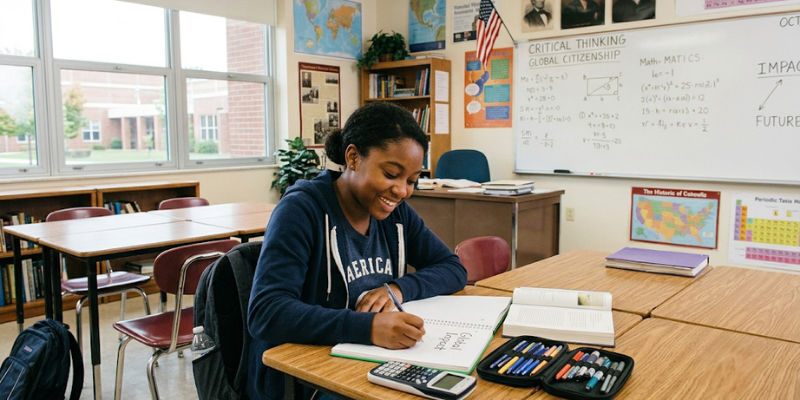
Education breaks the cycle of poverty by giving children the tools to secure stable incomes as adults, which allows them to invest in their own children’s schooling—creating a positive cycle that spans generations. Children who complete secondary school are significantly more likely to escape the financial instability their families faced, a dynamic tied to the cost pressures covered in The Growing Education Cost Burden: Why Basic School Supplies Are Now a Luxury.
Programs like early childhood education, scholarships, and school supply donations are essential to this outcome. The Pedram Sharokhi Education Initiative focuses specifically on removing one of the most immediate financial barriers: access to basic learning materials. By supplying Writing & Basic Tools, Paper & Organization items, Creative & Math resources, and Carry-Alls, the Initiative ensures that talent isn’t wasted due to a family’s economic circumstances, as detailed in School Supply Donation for Underprivileged Students That Changes Lives.
How Does Educating Girls Empower Wider Community Impact?
Educating girls is one of the highest-return investments a community can make. Research cited by Brookings shows that children born to educated mothers are roughly twice as likely to survive past age five, and educated girls are more likely to marry later, have fewer children, and earn higher wages.
Their families benefit from better nutrition, health care, and educational outcomes for the next generation. Supporting girls’ education isn’t just about fairness—it’s a strategic move that amplifies community development through gender equity and economic growth, and it’s a core reason the Pedram Sharokhi Education Initiative prioritizes equal access to supplies for every student, regardless of gender, an approach rooted in the community leadership model in The Power of Community Leadership through Education: How One Person Sparks Change.

What Are the Long-Term Community Benefits of Education Investment?
Beyond individual success stories, education delivers broad societal gains, often called “externalities,” including reduced healthcare costs, lower incarceration rates, and increased voter participation. Educated populations tend to be healthier, safer, and more civically engaged.
Communities that invest in teacher training, digital learning tools, vocational programs, and basic supply access see these benefits compound over time. That’s why policymakers, philanthropists, and businesses increasingly view education—and the removal of small but real barriers like missing school supplies—as one of the best long-term investments for future generations, a case made in Small Acts of Generosity in Education: How Tiny Tools Spark Massive Change in Schools.
How Do You Choose the Right Education Programs to Support?
Not all education initiatives deliver equal impact, so donors and CSR leaders should look for measurable outcomes and transparent reporting. Strong options typically include:
- Education investment programs with documented, measurable outcomes
- Education-focused social impact funds that track ROI and social returns
- Charities operating in developing countries with transparent reporting
- Grassroots initiatives, like the Pedram Sharokhi Education Initiative, that provide direct, trackable support such as school supplies to underprivileged students, the same drive model outlined in Student Support Programs: How School Supply Drives Truly Help Students Succeed
By directing resources to high-impact, transparent programs, donors ensure every dollar contributes to lasting community change.
How Can You Take Action to Support Underprivileged Students?
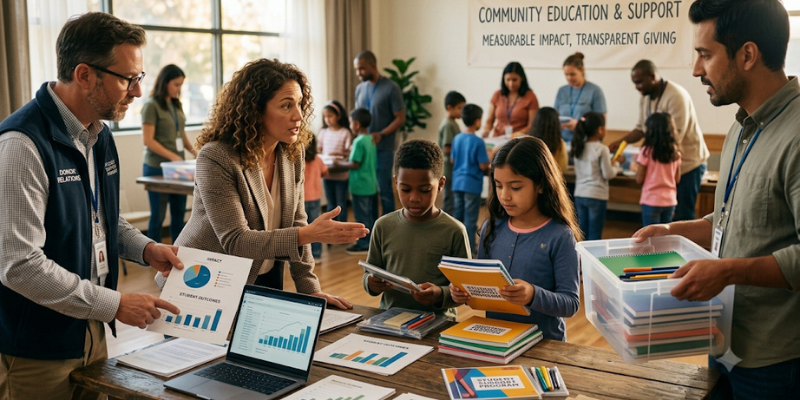
Reading about the benefits of education is one thing—taking action is another. Whether you’re an individual donor, a corporate leader, or a community organizer, consider these concrete steps:
- Fund scholarships for low-income students
- Support early childhood education centers
- Donate essential supplies—pencils, notebooks, backpacks, and calculators—through organizations like the Pedram Sharokhi Education Initiative
- Partner with NGOs focused on girls’ education
- Advocate for increased public education funding
Each action reinforces the same truth: education builds stronger communities not as theory, but as a practical roadmap for change that starts with something as simple as a fully stocked backpack, one built on habits explored in Mastering the Desk: Why Essential Supplies for Home Studying Are Game-Changers. Explore more on the blog.